
Colorado's Office Furniture Experts Who Actually Show Up
Colorado's Office Furniture Experts Who Actually Show Up
Colorado's Office Furniture Experts Who Actually Show Up
Based in Denver and Colorado Springs, serving businesses throughout Colorado with space planning, office furniture, delivery and professional installation.

7 Office Furniture Mistakes We’ve Seen – and How to Avoid Them
By Gary Schwankl, Founder, Office Furniture EZ
After enough years in the office furniture business, you start to notice the same mistakes coming around again and again.
Not because people are careless.
Usually, it’s because buying office furniture looks easier from the outside than it really is.
A desk is a desk, right?
A chair is a chair.
A cubicle is a cubicle.
Until the desks arrive and the walkway is too tight.
Or the beautiful chair everyone loved online is uncomfortable by lunchtime.
Or the workstations are laid out perfectly – except nobody thought about where the power and data would come from.
I’ve seen a thing or two over the years.
The good news is that most of these problems are avoidable.
Here are seven of the mistakes we see most often – and what we do to help customers avoid them.
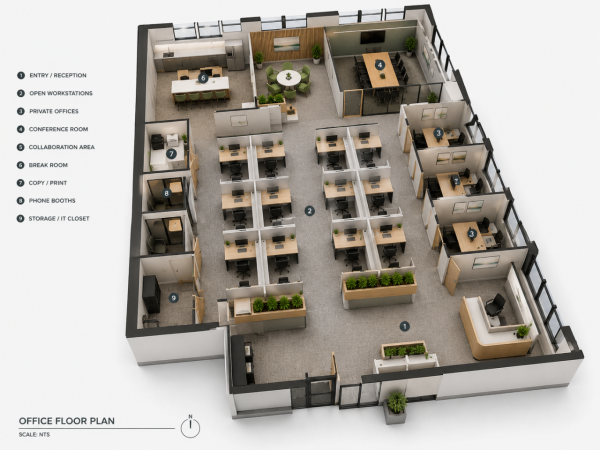
#1 – Buying the Furniture Before Really Understanding the Space
This one causes more trouble than almost anything else.
A customer finds a desk they like. The measurements technically fit. So far, so good.
But furniture doesn’t live in a room by itself.
People need to get around it.
Chairs need room to roll back.
Doors need to open.
File drawers need clearance.
Employees need pathways that don’t feel like an obstacle course.
And then there are all the things that don’t show up in the product dimensions: windows, columns, odd corners, power locations, conference areas and future growth.
A piece of furniture can fit on paper and still be completely wrong for the room.
That’s why, on larger projects, we like to understand the space first.
Sometimes that means measurements.
Sometimes it means a site survey.
Sometimes it means a 2D or 3D plan.
The goal is pretty simple:
Let’s find out whether it works before you own it.
That’s a whole lot easier than finding out after a truck is sitting outside.
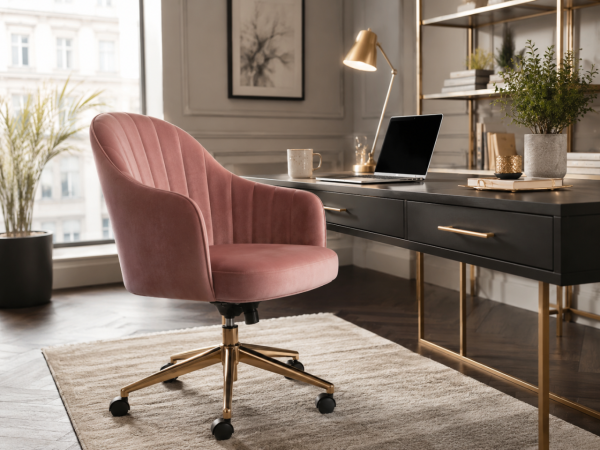
#2 – Falling in Love With the Pretty Chair
I’ll admit it.
Some office chairs look fantastic.
Beautiful leather. Sleek arms. Polished base. Great color.
And then you sit in one for six hours.
That’s when you learn that a good-looking chair and a good working chair are not always the same thing.
The chair is probably the most personal piece of furniture in the office.
Two people can sit in the same chair and have completely different opinions about it.
That’s why we look at things like:
Seat size and depth
Back support
Lumbar adjustment
Arm position
Chair height
Tilt and recline
Seat slider
Headrest position
How many hours a day the chair will actually be used
Sometimes the best-looking chair is the right one.
Sometimes it isn’t.
If you can, sit in a chair before you buy it.
At our Colorado Springs showroom, we regularly help people compare chairs, figure out what feels right and understand what all those levers and adjustments actually do.
And yes, sometimes the entire project really is:
“I just need one good chair.”
That’s perfectly fine with us.
We also help customers who need big-and-tall chairs, drafting stools and other specialty seating when a standard task chair isn’t the right fit.
#3 – Forgetting About Power and Data Until the End
This is one of those mistakes that can turn a nice project into an expensive headache.
Everything looks great.
The workstations line up nicely.
The layout feels open.
Then somebody asks the question:
“Where does everything plug in?”
Computers, monitors, phones and other equipment all need power and data.
Depending on the office, that may come from the walls, floor boxes, power poles or other locations.
That matters a lot when you’re placing cubicles and workstations.
Moving a desk on a drawing takes about three seconds.
Moving electrical service can be a very different story.
This is one reason we try to look at the room as a working environment — not just as empty square footage waiting for furniture.
The furniture has to work with the building.
Not fight it.
#4 – Assuming Everything Has to Be Brand New
There are plenty of times when new furniture is the right choice.
There are also plenty of times when it isn’t necessary.
Quality used office furniture can stretch a budget considerably, especially on larger projects.
And used doesn’t have to mean beat-up.
We see plenty of commercial furniture built to last for years and years.
A customer might decide to buy new ergonomic chairs for employees who sit all day, but choose used desks, storage cabinets or a conference table.
Another business may want everything new.
Another might furnish nearly the whole office with quality used pieces.
There isn’t one right answer.
The point is to know you have options.
We’d rather help somebody make a smart choice than sell them the most expensive version of every item in the building.

#5 – Comparing Quotes by Looking at One Number
This is a big one.
You get two office furniture proposals.
One costs less.
Easy decision, right?
Maybe.
Before you decide, take a good look at what each quote actually includes.
Is delivery included?
Assembly?
Installation?
Required hardware?
Cubicle connectors?
Project management?
Placement?
Packaging removal?
There can be a lot hiding behind one number.
We’ve seen situations where the quote that looked cheaper at first wasn’t cheaper once everything necessary was added.
That doesn’t mean you should automatically choose the higher price either.
It means you should know what you’re comparing.
Apples to apples is a wonderful thing.
If you don’t understand something in a proposal, ask.
A good furniture company should be willing to explain it.
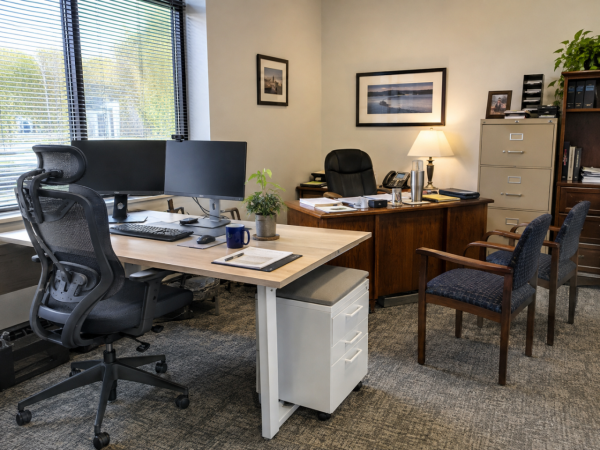
#6 – Furnishing the Office in Too Many Separate Stages
Sometimes a project gets divided up like this:
First, the workstations.
Then the conference room.
Then the private offices.
Then reception.
Then storage.
There are certainly times when phasing a project makes sense — especially if budgets, construction schedules or hiring plans require it.
But if you already know those other areas are coming, it’s usually worth planning the whole office together.
Why?
Because all those spaces affect each other.
The size and placement of the workstations can influence how much room is left for conference areas, private offices, storage and circulation.
Furniture finishes can also change over time. Inventory can change. A used piece that is available today may not be available several months from now. And ordering or installing pieces in multiple rounds can sometimes mean additional deliveries, scheduling and setup.
Planning everything together doesn’t necessarily mean you have to buy everything at once.
It means you make the decisions with the whole office in mind.
That gives you a better chance of ending up with a space that feels intentional instead of like several separate furniture projects happened to land in the same building.
If we know where the project is ultimately going, we can help you build toward that from the beginning.
#7 – Waiting Until the Last Minute
This is another one we see quite a bit.
The lease is signed.
The employees are scheduled to move.
The opening date is on the calendar.
And now it’s time to buy the furniture.
Some furniture can move quickly.
Some can’t.
Lead times vary.
Inventory changes.
Used furniture comes and goes.
Install schedules fill up.
And the more specific the project becomes, the more coordination may be involved.
You don’t necessarily need to order everything months and months ahead.
But it helps tremendously to start thinking about it early.
Even if all you can tell us is:
“We’re moving in October and we think we’ll need furniture for about 30 people.”
That’s enough to start a useful conversation.
The Part of Our Job We’re Proud Of
We sell office furniture.
Obviously, we’re happy when somebody buys office furniture from us.
But some of the moments I’m proudest of are when we can tell a customer:
“You don’t need that.”
Or:
“I wouldn’t buy that until we measure the room.”
Or:
“There’s a less expensive way to accomplish the same thing.”
Or even:
“That chair looks great, but I don’t think you’re going to like sitting in it all day.”
That’s part of doing this well.
Most of our customers don’t furnish offices every week.
We do this all the time.
So we don’t expect you to walk in knowing workstation dimensions, lead times, chair ergonomics, installation requirements or how power gets into a cubicle.
That’s our side of the table.
Your job is to tell us what you’re trying to accomplish.
Our job is to help you get there without stepping on the land mines we’ve already seen.

Want a Little Help Before You Start?
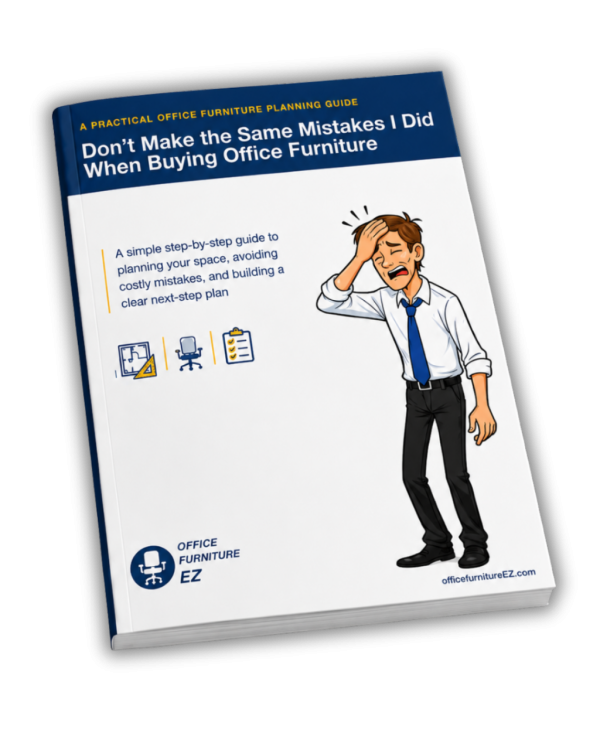
If you’re still early in the process, we created a separate Office Furniture Planning Guide to help you get organized before you start making purchases.
It’s not this article in PDF form.
It goes deeper into the actual planning process — things to think about before buying, questions to ask, project timing, furniture choices and the details that are easy to overlook when you’re just getting started.
Download the Free Office Furniture Planning Guide
No pressure. No obligation.
Just a useful place to start.
And if you’d rather talk it through with somebody, the Office Furniture EZ team helps businesses throughout Denver, Colorado Springs and surrounding areas with new and used office furniture, space planning, delivery and professional installation.
We’ve seen a thing or two.
We’d be happy to help you avoid seeing some of it yourself.
About Gary

Gary Schwankl is the founder of Office Furniture EZ. Since 2008, he and the Office Furniture EZ team have helped Colorado businesses plan, furnish and install workplaces ranging from single-office needs to larger commercial projects.
Need help? Have a question?
Looking for a price quote?
Request Space Planning Help